As CBD continues to gain popularity, many consumers wonder about its effects, especially regarding drug testing. A pivotal question arises: "Does vaping CBD show up on a drug test?" According to Dr. Sarah Johnson, a leading cannabis researcher, “While CBD itself is often not tested for, the THC present in some products may cause issues.” This raises concerns among users who want to avoid potential pitfalls.
Vaping CBD is regarded for its therapeutic benefits. However, the presence of THC in some CBD products complicates matters. Users may assume that vaping CBD is entirely safe from drug tests, but this isn't always true. The potential for trace amounts of THC could lead to unexpected results.
Moreover, the lack of regulation in the CBD industry results in inconsistencies in product labeling. This can mislead consumers. As Dr. Johnson emphasizes, understanding what's in a product is crucial. Ultimately, individuals should approach vaping CBD with caution, particularly if they are subject to drug tests. This complexity warrants deeper consideration on the implications of CBD consumption and its visibility in drug screenings.
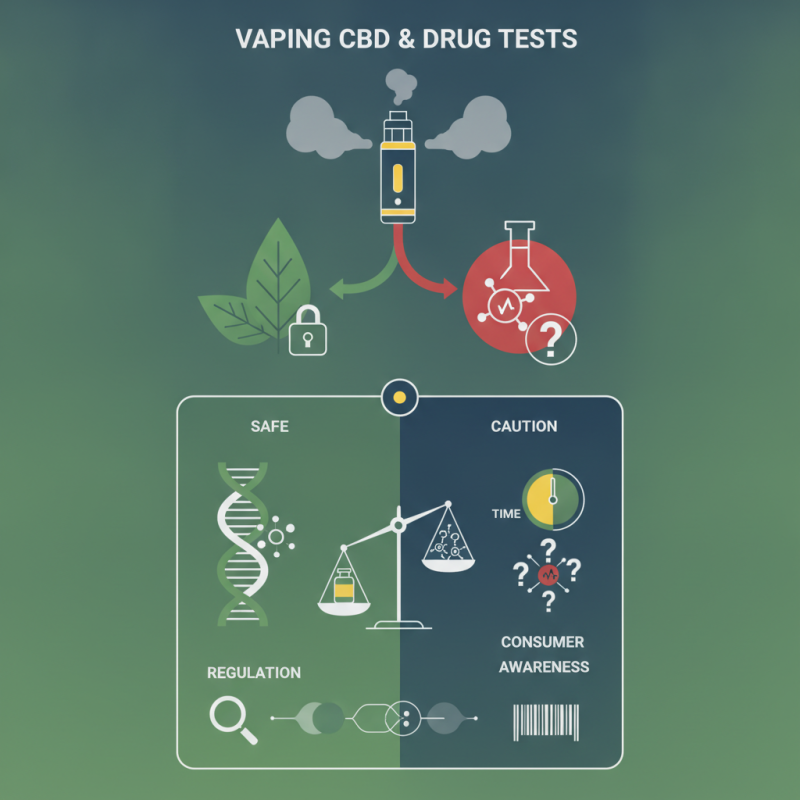
Understanding CBD and Its Sources
CBD, or cannabidiol, is derived from the hemp plant. It is known for its potential therapeutic benefits. Extracting CBD involves sourcing it from various parts of the plant, like the flowers and leaves. This extraction can be done through methods like CO2 extraction or solvent extraction. Each method has its own pros and cons, affecting the final product's purity and quality.
The source matters significantly. Full-spectrum CBD contains all cannabinoids, including trace amounts of THC. This can be concerning for those worried about drug tests. In contrast, broad-spectrum CBD and isolate forms contain little to no THC, making them safer for those tested for substances. However, the industry lacks strict regulations, leading to variability in product labeling and actual content. Consumers should carefully research products to ensure reliability.
Understanding the full spectrum of CBD sources is crucial. Many people might not realize that even trace amounts of THC could show up on drug tests. Testing positive can happen even with products marketed as "THC-free." This highlights the importance of knowledge and awareness. Always scrutinize lab reports when buying CBD products to make informed decisions.
The Vaping Process: How CBD Is Inhaled
Vaping CBD has gained popularity due to its convenience and perceived benefits. The process involves heating a CBD vape oil until it turns into vapor, which is then inhaled. This method allows for quick absorption into the bloodstream, providing faster effects than other forms of consumption. Many users enjoy the ritual of vaping, combining it with their daily routines.
Inhalation delivers CBD directly to the lungs, where it can be absorbed rapidly. Users often describe feeling the effects within minutes. This timing can vary based on factors like individual metabolism and concentration of the CBD. However, it's important to remember that vaping is not without its concerns. The quality of the product matters greatly. Not all vape oils are created equally. Some may contain additives that could affect health.
Even with perceived benefits, there’s uncertainty around vaping CBD and drug tests. Depending on the purity of the product, trace amounts of THC could be present. This raises questions about reliability in certain employment contexts. It’s wise for users to consider their specific situations before using CBD products, especially if they may face drug testing. Caution is key in navigating the emerging landscape of vaping CBD.
Does Vaping CBD Show Up on a Drug Test for Buyers? - The Vaping Process: How CBD Is Inhaled
| Testing Method |
Detection Window |
CBD Concentration |
Likelihood of Positive Test |
Recommended Actions |
| Urine Test |
1-30 days |
Low to Moderate |
Possible if high THC content |
Choose broad-spectrum products |
| Saliva Test |
1-3 days |
Low |
Rare |
Avoid vaping before testing |
| Blood Test |
1-2 days |
Very Low |
Unlikely |
Consult with a professional |
| Hair Test |
Up to 90 days |
Moderate |
Possible |
Wait for a longer period |
Drug Tests: Types and What They Detect
When it comes to drug tests, it's essential to understand the different types and what they detect. Most conventional drug tests primarily look for THC, the psychoactive component in marijuana. Some tests can detect CBD metabolites, but this is less common. A report by the Substance Abuse and Mental Health Services Administration (SAMHSA) indicates that standard tests focus mainly on THC, cocaine, opiates, and other major substances. Therefore, if you use CBD that is derived from hemp with less than 0.3% THC, it’s less likely to show up on a drug test.
However, not all CBD products are created equal. Some may contain higher levels of THC than advertised, which could lead to a positive result. Unregulated markets can produce oils and vapes with varying THC concentrations. According to a study published in the Journal of Pharmaceutical Sciences, nearly 70% of CBD products tested contained levels of THC beyond the legal limit. This inconsistency raises concerns about product reliability.
Tips: Always check product labels before purchasing. Look for third-party lab results to confirm cannabinoid contents. Choose products from reputable sources to minimize the risk of unexpected outcomes from drug tests. Remember, even if CBD itself is legal, its association with THC can complicate drug screening results. Being informed can save you trouble in the long run.
CBD Consumption and Drug Test Detection Rates
Can CBD Vaping Lead to Positive Drug Test Results?
Vaping CBD has gained popularity among wellness seekers. Many people wonder if this practice can lead to positive results on drug tests. The primary concern lies in the presence of THC, the psychoactive compound found in cannabis. Most CBD products contain trace amounts of THC, which might trigger a positive result.
When you vape CBD, you inhale vaporized cannabinoids into your system. This process can lead to different outcomes based on the type of CBD product used. Full-spectrum CBD oil includes all cannabinoids, including THC. Even low levels of THC can accumulate in your system over time. Isolates, on the other hand, contain only CBD and no THC. These products are less likely to result in a positive drug test.
Testing varies among employers and jurisdictions. Some drug tests specifically look for THC, while others check for an array of cannabinoids. It is crucial to consider how these tests are conducted. The legal landscape around CBD and THC is complex and differs by region. As a result, individuals may face unexpected consequences. It’s essential to stay informed and make decisions carefully. Ultimately, consumers should be aware of what they are vaping and how it may affect them in a drug testing scenario.
Factors Influencing Drug Test Outcomes for Vaping CBD
Vaping CBD has gained popularity, but its impact on drug tests remains unclear. Various factors influence whether CBD consumption is detected in these tests. One primary concern is the THC content found in certain CBD products. Although hemp-derived CBD contains only trace amounts of THC, some products may exceed the legal limit of 0.3%. This discrepancy can lead to positive test results.
A study published in the Journal of Analytical Toxicology found that even low levels of THC can accumulate in the body. Depending on individual metabolism and frequency of use, this can complicate drug testing outcomes. It shows that the method of consumption, dosage, and even the user's metabolism can play significant roles. Some users report feeling anxious about the prospects of failing drug tests, despite using products marketed as THC-free.
Additionally, different testing methods can yield varying results. Urine tests are the most common and can detect THC for several days after consumption. In contrast, blood tests have a much shorter window of detection. This variability highlights the unpredictability of drug testing outcomes. Users must exercise caution and consider all these factors to mitigate the risks associated with vaping CBD.
FAQS
: CBD, or cannabidiol, is a compound derived from the hemp plant known for potential therapeutic benefits.
CBD can be extracted from the hemp plant's flowers and leaves. Common methods include CO2 extraction and solvent extraction.
Full-spectrum CBD contains all cannabinoids, including trace THC, while isolate contains only CBD with no THC.
Yes, using CBD products with THC can potentially lead to positive drug test results, even if THC levels are low.
The source affects product quality and safety. Unregulated products may not be accurately labeled, which can be concerning.
Yes, scrutinizing lab reports is crucial for ensuring the reliability of CBD products and understanding their content.
Drug tests vary; some target THC specifically, while others check for a range of cannabinoids.
Vaping involves inhaling vaporized cannabinoids, and the type of CBD product influences the likelihood of positive drug test results.
Yes, consumers may face unexpected consequences due to the lack of industry regulations and variable product content.
Awareness about the product's THC content and testing methods is essential for informed decision-making and to avoid complications.
Conclusion
The article titled "Does Vaping CBD Show Up on a Drug Test for Buyers?" explores various aspects of CBD, emphasizing its sources and the process of vaping. It highlights that while CBD is derived from hemp and is non-psychoactive, its interaction with drug testing is complex. The types of drug tests and what they detect are outlined, with a specific focus on how Vaping CBD may or may not lead to positive test results.
The discussion continues by examining factors that influence drug test outcomes, such as the presence of THC (tetrahydrocannabinol) in certain CBD products. Ultimately, the article addresses the question, "Does vaping CBD show up on a drug test?" and clarifies that while pure CBD typically does not lead to a positive result, the risk depends on the quality and composition of the CBD product being used.

 Zeno Vape