Why does nic salt make me cough more than cigarettes? This question deserves a careful, evidence-based answer, especially for adults comparing products marketed as “China best nic salt.” A smoother inhale does not always mean a gentler airway experience.
Nicotine salts use benzoic acid to reduce pH and soften throat harshness. That smoother feeling may encourage deeper or more frequent inhalation. High nicotine concentrations can then deliver a stronger dose with each puff. Propylene glycol, flavoring chemicals, dry aerosol, and individual sensitivity may also irritate the throat. The cough can feel sudden, like a scratch behind the tongue.
The National Academies of Sciences, Engineering, and Medicine reported in 2018 that e-cigarette aerosol can expose users to potentially harmful substances, although exposure generally differs from combustible cigarette smoke. The World Health Organization has also stressed that electronic nicotine products are not harmless. Evidence remains uneven. Device power, liquid formulation, puff duration, and health history can change the response.
Dr. Konstantinos Farsalinos, a cardiologist and tobacco-harm researcher, has noted, “Propylene glycol is more likely to cause throat irritation and coughing than vegetable glycerin.” This point helps explain why one nic salt liquid feels comfortable, while another causes repeated coughing.
Still, the comparison is imperfect. Cigarette smoke contains thousands of combustion chemicals, and smokers may adapt to its harshness over time. A stronger cough after nic salt does not prove that cigarettes are safer. Persistent coughing, chest tightness, wheezing, or breathlessness deserves medical attention. Product labels also need scrutiny, because nicotine strength and ingredients may not always match expectations.
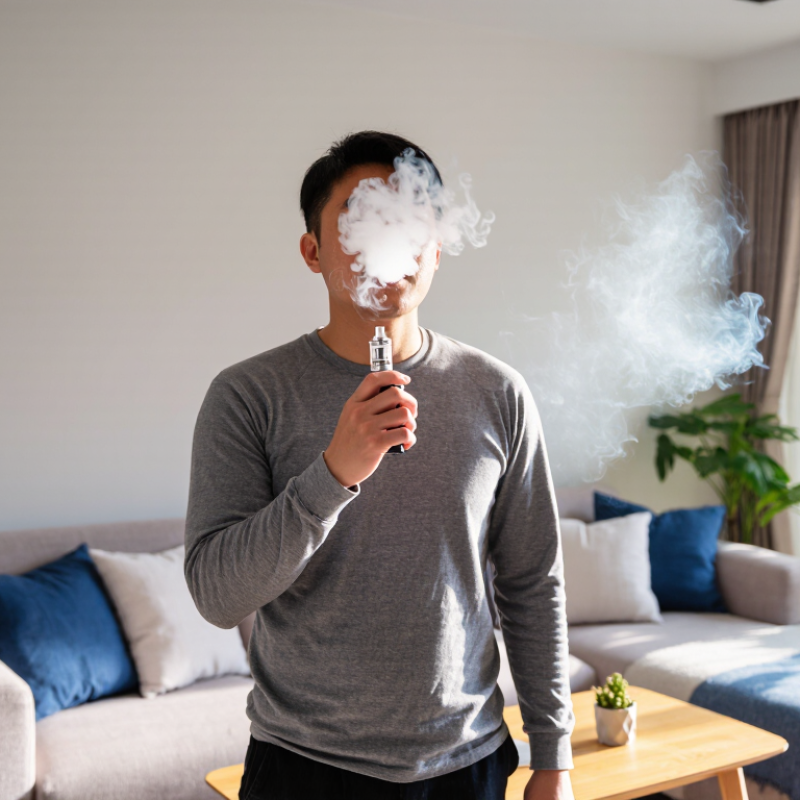
China nic salt refers to e-liquid made with nicotine salts, often manufactured in China. The phrase describes origin and formulation, not a single quality standard. Nicotine salts usually combine nicotine with an acid, creating a smoother aerosol at higher nicotine strengths. Traditional freebase e-liquid feels sharper in the throat. Both types commonly contain propylene glycol, vegetable glycerin, flavorings, and nicotine.
Why does it make me cough more? The cause may be stronger nicotine, a high propylene glycol ratio, intense flavoring, or an unsuitable device. Dry vapor can feel like warm dust on the throat. A poorly maintained coil may also produce a harsh, burnt taste. Origin alone does not explain the reaction. I once assumed smoother vapor meant gentler vapor, but that assumption can be misleading. Nicotine tolerance, inhalation habits, and individual sensitivity matter. Persistent coughing, chest discomfort, dizziness, or breathing difficulty deserves medical advice. Stopping is sensible when symptoms continue.
Tips: Check the nicotine strength and ingredient information. Use only products with clear labeling and traceable batch details. Avoid deep inhalation and do not mix unknown liquids. Keep the container away from children and pets. If the liquid feels unusually harsh, stop using it. A pharmacist or healthcare professional can help assess nicotine exposure and throat irritation.
| Data Dimension | China Nic Salt: What It Means | Typical Characteristics | Why It May Cause More Coughing | Comparison With Other E-Liquids |
|---|---|---|---|---|
| Product Definition | “China nic salt” generally refers to e-liquid manufactured in China that uses nicotine in a salt formulation. It is not a standardized chemical or quality grade. | Product quality, ingredients, nicotine concentration, and manufacturing controls can vary between suppliers and batches. | The country of manufacture alone does not explain coughing. The formulation and device setup are more relevant. | Nicotine salt describes the nicotine formulation; it does not automatically indicate higher or lower quality than freebase e-liquid. |
| Nicotine Form | Nicotine is commonly combined with an organic acid, such as benzoic acid or another permitted acid, to create a nicotine-salt formulation. | The acid lowers the pH compared with unmodified freebase nicotine. | Lower pH can reduce throat harshness, allowing users to inhale more nicotine or take longer puffs before noticing irritation. | Freebase nicotine usually has a stronger alkaline throat sensation at comparable concentrations, while salt formulations are often smoother. |
| Nicotine Strength | Strengths vary widely by product and jurisdiction. Some pod-oriented products contain relatively high nicotine concentrations. | Always verify the label in mg/mL or percentage. A 5% label is commonly understood as approximately 50 mg/mL, although labeling practices may differ. | Higher nicotine delivery can trigger throat irritation, coughing, nausea, dizziness, or headache, especially in inexperienced users. | Freebase liquids are often sold in lower strengths for larger, higher-power devices, while salt liquids are commonly used in lower-power pod systems. |
| Propylene Glycol (PG) | PG may be used as a carrier in Chinese-made and other e-liquids. The exact PG/VG ratio should be checked on the label. | PG carries flavor efficiently and produces more throat sensation than vegetable glycerin (VG). | A high-PG formula can feel dry or sharp and may increase throat irritation or coughing in sensitive users. | Higher-VG liquids are generally smoother but thicker; high-PG liquids are thinner and often produce a stronger throat hit. |
| Vegetable Glycerin (VG) | VG is commonly blended with PG to control vapor density, texture, and viscosity. | Higher VG usually creates denser, softer vapor but may require a device designed for thicker liquid. | Excessive vapor volume, large puffs, or an unsuitable device can overwhelm the throat and airways even when the liquid feels smooth. | Salt liquids designed for pods often use a thinner blend than high-VG liquids intended for sub-ohm devices. |
| Device Compatibility | Nicotine salts are commonly paired with low-power pod systems, but some products may be used incorrectly in higher-power devices. | Low-resistance coils and high wattage can vaporize much more liquid per puff. | Using a high-strength salt liquid in a powerful device can deliver excessive nicotine and vapor, making coughing more likely. | High-power vaping is generally better matched with lower-nicotine e-liquid, while high-strength salt products are usually intended for lower-power devices. |
| Puffing Pattern | Salt formulations may feel smoother, which can encourage deeper or more frequent inhalation. | Long draws, repeated puffs, and inhaling directly into the lungs increase aerosol exposure. | Rapid repeated use can dry and irritate the throat and may increase the amount of nicotine and flavor aerosol inhaled. | A smoother sensation does not mean the aerosol is harmless or that more frequent use is risk-free. |
| Flavor Ingredients | Flavor mixtures can include multiple substances, and the complete formulation may not always be obvious from the product name. | Menthol, cooling agents, cinnamon-type flavors, acidic notes, and strong flavor concentrates may feel irritating to some users. | Individual sensitivity to a flavoring ingredient can cause throat discomfort, coughing, or chest irritation. | Flavor-related irritation can occur with both nicotine-salt and freebase e-liquids; it is not unique to products made in China. |
| Quality and Consistency | Manufacturing quality depends on the specific producer, laboratory controls, raw materials, filling process, and storage conditions. | Potential concerns include inaccurate nicotine labeling, contamination, batch inconsistency, leaking containers, or degraded ingredients. | Unexpected strength or contaminants may produce unusually harsh sensations or respiratory symptoms. | Origin alone is not a reliable quality indicator. Traceability, batch testing, ingredient disclosure, and compliant packaging are more useful indicators. |
| Regulatory Status | Legal nicotine limits, labeling rules, testing requirements, and product standards differ by destination market. | A product made in one country may not comply with the rules of the country where it is sold. | Missing or unclear labeling makes it harder to identify nicotine strength, ingredients, or unsuitable device use. | Check the regulations and required warnings in the market where the product is purchased and used. |
| Most Likely Cough Triggers | Common contributors include high nicotine strength, high PG content, excessive wattage, long or repeated puffs, dry or burnt coils, strong flavorings, airway sensitivity, and inhaling aerosol deeply. | Coughing is a symptom, not a reliable test of product quality. Stop using the product if coughing is persistent or severe. | These triggers can affect both nicotine-salt and freebase e-liquids. | |
| Practical Risk-Reduction Check | Confirm the nicotine concentration, PG/VG ratio, batch information, ingredient list, product seal, and device power range. Avoid using high-strength salt liquid in a high-power device. | Do not ignore persistent symptoms | Seek medical advice for ongoing cough, wheezing, chest pain, shortness of breath, fever, or symptoms that worsen after vaping. | |
| Overall Conclusion | China nic salt is best understood as a nicotine-salt e-liquid made in China, not as a single standardized product category. | If it makes you cough more, the likely explanation is the combined effect of strength, ingredients, aerosol quantity, device settings, and personal sensitivity—not simply its country of origin. | Nicotine salts can feel smoother than freebase liquids, but smoother inhalation does not eliminate nicotine exposure or respiratory irritation. | |
It usually describes nicotine-salt e-liquid manufactured in China. The phrase indicates origin and formulation. It does not guarantee quality. Check the ingredients, nicotine strength, and batch information carefully.
Strong nicotine, dry vapor, or intense flavoring may irritate your throat. A tight airflow setting can make each puff feel concentrated. A damaged coil may taste burnt. Smoother vapor can still irritate.
No. A smoother feeling may encourage longer or deeper inhalation. That can send more aerosol toward your throat and airways. I once assumed smooth meant gentle. That assumption was incomplete.
Higher nicotine strength may cause throat tightness, dizziness, or rapid inhalation. Nicotine tolerance differs between people. A liquid that feels mild to one person may feel harsh to another. Check the label before using it.
Yes. Excessive heat, restricted airflow, and long puffs may worsen irritation. A dry coil can create hot, unpleasant vapor. Shorten each puff. Avoid repeated inhalation.
Propylene glycol can feel dry or sharp in the throat. Vegetable glycerin may create denser aerosol. Flavorings can also irritate sensitive users. Unknown mixtures are a poor choice.
Stop using the liquid when coughing persists or becomes uncomfortable. Seek medical advice for chest pain, wheezing, dizziness, or breathing difficulty. Do not simply tolerate worsening symptoms. Stopping is sensible.
Use products with clear ingredient labels and traceable batch details. Avoid deep inhalation and unknown liquids. Drink water if your throat feels dry. Keep containers away from children and pets. Nicotine is unsuitable during pregnancy.
China nic salt refers to an e-liquid made with nicotine salts, which are designed to provide a smoother sensation at higher nicotine levels than traditional freebase nicotine. However, smoother does not always mean gentler on the lungs or throat. If you are wondering, “Why does nic salt make me cough more than cigarettes,” the answer may involve stronger nicotine delivery, deeper or more frequent inhalation, and individual sensitivity.
Coughing can also be triggered by high nicotine strength, propylene glycol, concentrated flavorings, or device settings that produce too much vapor or heat. To reduce irritation, consider using a lower nicotine level, taking shorter and gentler puffs, staying hydrated, and checking whether certain flavors worsen your symptoms. If coughing continues, becomes painful, or is accompanied by breathing difficulty, chest discomfort, dizziness, or nausea, stop using the product and seek medical advice. Responses vary, so persistent symptoms should not be ignored.

 Zeno Vape