Can you use nic salts in a sub-ohm tank? The short answer is usually not recommended. Sub-ohm coils have low electrical resistance and can produce more vapor with each puff. That can deliver nicotine quickly, especially when a liquid contains a high nicotine concentration. A smoother inhale does not mean a smaller dose.
The National Academies of Sciences, Engineering, and Medicine reported that e-cigarette aerosol can contain potentially harmful substances, and that exposure varies with device settings and use. The CDC also emphasizes that nicotine is addictive and that e-cigarette aerosol is not harmless. These findings matter at the tank level: a wide-bore drip tip, a warm coil, and repeated deep draws can turn a small setting choice into a much stronger experience than expected. Check the liquid label and the tank maker’s recommended coil range. Do not assume a liquid designed for a low-power pod will suit a high-output tank.
This guide looks at five practical checks: nicotine strength, coil resistance, power settings, puffing habits, and warning signs such as nausea or dizziness. Stop using the device if you feel unwell, and seek medical advice for concerning symptoms. Product designs differ, and published evidence does not establish one nicotine strength as safe for every user or device. That uncertainty deserves attention. A careful setup matters, but it cannot remove nicotine’s risks.
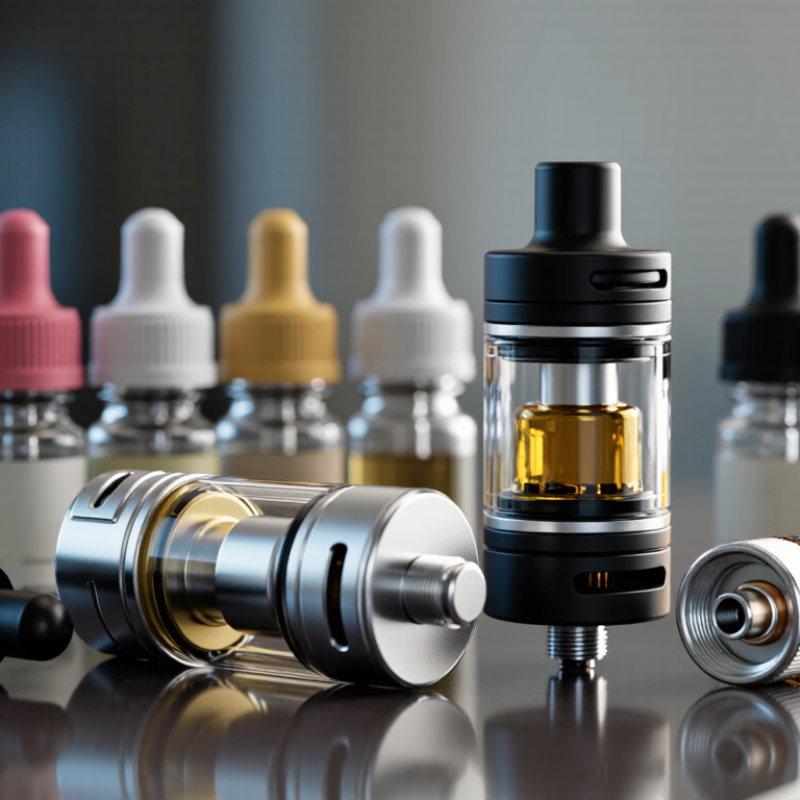
Nicotine salts and freebase nicotine deliver the same addictive substance, but their chemistry differs. Freebase nicotine is less protonated and usually feels sharper in the throat as concentration rises. Nicotine salts combine nicotine with an acid, lowering the liquid’s pH and often reducing that harsh sensation. The difference is not a safety advantage. A smoother inhale can make a strong liquid feel deceptively mild.
The National Academies’ 2018 report, which reviewed more than 800 studies, found that nicotine delivery varies with device design, liquid, and puffing behavior. That matters in a sub-ohm tank: its higher power can produce more aerosol than a low-power pod. Salt liquids are often formulated for lower-power devices, so their concentration and the tank’s output deserve careful attention. The distinction is useful, but not neat; labels alone cannot predict the dose a person absorbs.
Tip: Check the liquid’s nicotine concentration before filling, and follow the tank maker’s operating guidance. If the throat feels unusually harsh, or you feel dizzy or nauseated, stop using it. A small adjustment may seem harmless, but guessing is not a reliable way to judge exposure.
A sub-ohm tank uses a coil with low electrical resistance and usually produces more aerosol than a lower-powered setup. That can mean more nicotine reaches the user with each puff, though the amount varies. Nicotine strength, airflow, power, and puff length all matter. Small settings changes can make a noticeable difference.
Nicotine salts may feel smoother than some other nicotine liquids at similar strengths. Smoothness is not a reliable measure of dose. A long draw from a high-output tank can deliver more aerosol than expected, even when the throat sensation feels mild. Take short puffs and pause between them. Watch for nausea, dizziness, headache, or a racing heartbeat; these can signal too much nicotine.
If a liquid’s nicotine concentration is high, pairing it with a sub-ohm tank may make intake difficult to judge. Check the product directions and device limits, and consider a lower concentration rather than compensating with frequent, deep puffs. It is easy to underestimate the effect. Delivery differs from person to person, so keeping notes on puff frequency may help reveal patterns—but it is an imperfect measure, not a dose reading.
How sub-ohm tanks can affect nicotine delivery
These bars show the labeled nicotine content in 1 mL of e-liquid—not the amount absorbed by a person. Higher-power sub-ohm setups can use more liquid per puff, so nicotine intake may rise; actual delivery varies with the device and vaping behavior. Nicotine salts can feel smoother at higher concentrations, but that does not make them safer. Check device guidance and choose a strength appropriate for the setup. The 20 mg/mL EU limit shown here is specific to the EU, not a worldwide limit.
A sub-ohm tank uses a coil below 1 ohm and often produces more vapor than a low-power device. That can make nicotine delivery feel stronger, especially with high-strength nicotine salt e-liquid. Check the liquid’s nicotine concentration and your tank’s recommended wattage before filling. Then inspect the coil resistance and airflow settings. A tight, hot draw may feel harsh; a few numbers on a label cannot predict everyone’s response.
Tips
Start with the tank maker’s stated power range, and use a lower setting within it. Take one short puff, then pause and notice how you feel. If you feel dizzy, nauseated, or develop a headache, stop using it. Do not keep vaping to “get used to” discomfort. It is easy to misjudge a smooth throat feel.
Also check the e-liquid label for nicotine strength and suitability for the device type. Nicotine salts can feel smoother than freebase nicotine at similar concentrations, but smoothness does not mean low strength. If the label is unclear, or the liquid seems too strong, don’t guess—ask a qualified retailer or healthcare professional. Device and liquid guidance can vary, and personal sensitivity varies too.
Choosing a lower nicotine strength for sub-ohm vaping starts with the device, not just the label. Sub-ohm coils use higher power and can produce more aerosol per puff. The National Academies’ 2018 report found that nicotine delivery varies with device power, liquid concentration, and puffing behavior. So a strength that feels mild in a low-power device may feel intense in a sub-ohm tank. Nicotine is addictive. Go slowly.
Check the liquid’s stated concentration, then consider how often you puff and how long each session lasts. If you are switching from a higher-strength liquid, a lower concentration may be more comfortable, but there is no universal conversion. A 2015 study by Farsalinos and colleagues also showed that users can change their puffing behavior when nicotine strength changes. That makes simple calculations imperfect. Watch for nausea, dizziness, headache, or a racing heartbeat; stop using the device if these occur and seek medical advice if symptoms persist. Keep notes for a few days: concentration, puff frequency, and how you feel. Small details matter. A clinician or pharmacist can help you assess nicotine use, especially if you have a health condition or take medication.
| Tip | What to Consider | Practical Guidance |
|---|---|---|
| 1. Check the nicotine strength first | Sub-ohm tanks typically produce more vapor per puff than low-power pod devices, so each puff may deliver more nicotine. | If choosing a nicotine-containing liquid for a sub-ohm setup, many users look at low strengths such as 3 mg/mL or less. This is not a personal dosage recommendation; needs vary. |
| 2. Understand the salt formulation | Nicotine salts can feel smoother at higher concentrations than freebase nicotine, which may make it easier to take in more nicotine without a strong throat sensation. | A smoother feel does not mean lower nicotine exposure or lower risk. Avoid assuming that a high-strength salt liquid is suitable for a high-power tank. |
| 3. Match the liquid to the device | Sub-ohm coils are generally designed for higher-power use and more airflow. Liquid thickness and the device’s operating range affect wicking and performance. | Follow the device and coil instructions. Check the liquid’s VG/PG ratio and coil compatibility; do not exceed the coil’s stated power range. |
| 4. Reduce strength gradually if needed | A lower concentration may not feel equivalent if puff frequency or vapor production increases. | Change one factor at a time and monitor how often you vape. Do not compensate for a lower strength by vaping continuously. |
| 5. Watch for signs of too much nicotine | Possible symptoms include nausea, dizziness, headache, sweating, or a racing heartbeat. | Stop using the product if symptoms occur. Seek urgent medical advice for severe symptoms. Keep nicotine liquids away from children and pets. |
| Note: Nicotine is addictive. Nicotine-containing vaping products are not risk-free and are not intended for people who do not use tobacco or nicotine. Regulations and product labeling vary by location. | ||
Nicotine salts can deliver substantial nicotine, and a sub-ohm tank can produce dense aerosol with each puff. The National Academies’ 2018 report, Public Health Consequences of E-Cigarettes, notes that nicotine delivery varies with device design, liquid strength, and user puffing patterns. That makes a fixed “safe number” of puffs unreliable. Pay attention to your body, not just the label.
Watch for nausea, dizziness, headache, shakiness, sweating, or a fast heartbeat. These can signal too much nicotine, though they may have other causes. Stop vaping and get fresh air if symptoms begin. Seek urgent medical advice for severe or worsening symptoms, such as breathing difficulty, confusion, or repeated vomiting. Take care.
Reduce exposure by choosing a lower nicotine strength, shortening sessions, and spacing out puffs. Avoid chain vaping, especially when a powerful tank produces large clouds. Keep liquid away from skin and eyes, and wash spills promptly. CDC’s 2014 poison-center report recorded monthly e-cigarette exposure calls rising from one in September 2010 to 215 in February 2014; over half involved children under five. Those calls mainly concerned liquid exposures, not routine vaping, but they underline why careful storage matters. I used to think a mild throat sensation meant low exposure. It doesn’t reliably.
Nicotine salts combine nicotine with an acid. Freebase nicotine is less protonated and may feel sharper in the throat.
No. A smoother inhale does not mean lower strength or reduced risk. Nicotine is addictive.
Its coil has resistance below one ohm and can produce more aerosol. Device power and puffing habits also matter.
Check the liquid label and your tank’s operating guidance before filling. Not every liquid suits every device.
Check nicotine concentration, coil resistance, airflow, and the recommended wattage. Labels cannot predict everyone’s exposure.
Stop using the device. Do not keep vaping to get used to discomfort.
No. Nicotine salts may feel smoother at similar concentrations. That sensation can be misleading.
Don’t guess. Ask a qualified retailer or healthcare professional for guidance. Personal sensitivity varies.
Can you use nic salts in a sub-ohm tank? In some cases, yes, but the combination requires care. Nicotine salts are formulated to provide a smoother throat sensation than freebase nicotine at similar strengths. Sub-ohm tanks use low-resistance coils and produce more vapor, which can deliver nicotine more quickly and in greater amounts than many lower-output devices. As a result, a nicotine strength that feels comfortable in another setup may be too strong in a sub-ohm tank.
Before use, check the e-liquid’s strength and suitability information, and make sure it is compatible with your tank and coil. If choosing nicotine salts for sub-ohm vaping, consider a lower strength and begin with small, spaced-out puffs rather than frequent use. Watch for signs of excessive nicotine intake, such as nausea, dizziness, headache, or a racing heartbeat. If these occur, stop vaping and reduce exposure; seek medical advice if symptoms are severe or do not improve.

Zeno Vape